
Are Your Receipts Audit-Ready? Learn GST/VAT-Inclusive Pricing for Restaurants & Hotels
Reading Time: 7 minutesRestaurants and hotels issue receipts every day. Most customers see them as proof of payment. Tax authorities see something else. They see tax records that must show the right information, from prices to GST or VAT calculations. That’s why audit-ready receipts do more than record a sale.
Because GST and VAT rules vary by jurisdiction, even small receipt errors can create extra work during an audit. Receipt requirements, tax rates, invoice thresholds, and record-retention periods differ by jurisdiction. Businesses should confirm the applicable rules with their local tax authority or a qualified tax professional.
Missing tax rates, unclear pricing, or incorrect totals can slow audits, create bookkeeping problems, and even lead to penalties. Showing GST/VAT-inclusive pricing also gives customers a clear view of what they’ll pay.
This guide explains:
- What makes a receipt audit-ready
- How inclusive vs. exclusive pricing works
- Why it supports better hospitality tax reporting
It also discusses the practical steps restaurants and hotels can take to reduce audit risks and improve tax compliance.
Highlights
- – Create audit-ready receipts by including complete tax details, itemized charges, and consistent receipt information on every transaction.
- – Use GST/VAT-inclusive pricing to improve price transparency and support accurate hospitality tax reporting.
- – Automate receipt management with accounting software to improve compliance, store digital records, and reduce manual work.
What are audit-ready receipts?
An audit-ready receipt is a receipt that includes the information needed to support accurate tax reporting. It provides tax authorities, customers, and your finance team with a clear record of the transaction, the taxes applied, and the final amount calculated.
The information every compliant receipt should include
Every receipt should include your business name and details, a receipt number, date, and customer information where local rules require it. It should also list each product or service, along with:
- – The price for every line item
- – The GST/VAT rate
- – The tax amount
- – The final total
- – The currency
- – The payment method
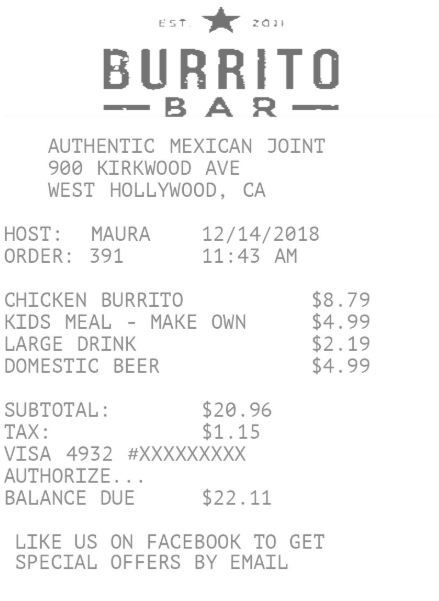
For example, a hotel receipt should list every service provided, including the room charge, not just the total.
If the expense is for a business purpose, the receipt or invoice should also include the customer’s tax ID or VAT number where local rules require it.
Why receipts are a key part of tax compliance
Tax authorities use receipts to verify that businesses collect and report taxes correctly. Missing tax rates or amounts can affect deductions or even lead to penalties.
For example, if a restaurant receipt leaves out the VAT amount, both the customer and the finance team may have trouble using it for tax records or audit checks.
Understanding GST/VAT-inclusive pricing in hospitality
Restaurants and hotels often display prices that already include GST or VAT. This helps customers understand the full cost before they pay and supports clearer tax records.
What GST/VAT-inclusive vs exclusive pricing means
GST/VAT-inclusive pricing means the tax is already built into the price the guest sees. With exclusive pricing, the tax is added later, usually at checkout or on the final bill.
Restaurants and hotels often use tax-inclusive prices because guests want to know the full cost before they pay. This approach keeps bills clearer, reduces confusion, and supports price transparency.
Accurate pricing on each receipt also supports tax reporting and provides useful financial insights into revenue, tax obligations, and profit margins. When those numbers are correct, hospitality businesses can strengthen internal controls, reduce audit risks, and make better financial decisions.
How restaurants and hotels apply different tax rates
Not every item on a receipt follows the same tax rule. Food, alcohol, accommodation, room service, service charges, and local tourism taxes may have different GST or VAT rates depending on the jurisdiction.
When required, receipts should show each taxable item on a separate line rather than grouping everything.
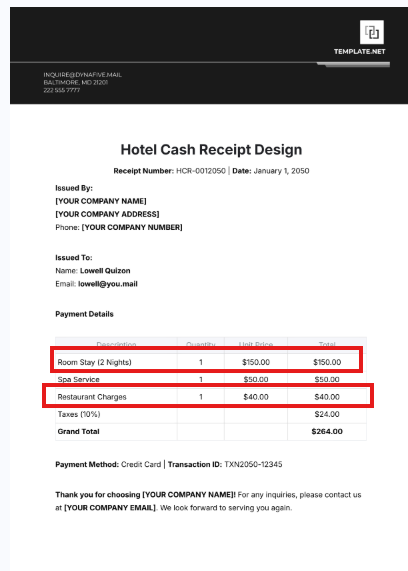
Taxable items on a hotel receipt
For example, a tour to Monte Cassino may include hotel stays, restaurant meals, and transportation. Under EU VAT rules, each part of the package may require its own tax treatment, and the receipt should include clear tax-inclusive pricing.
Common receipt mistakes that create audit risks
Even small receipt errors can create problems during tax reporting or an audit.
Many of these mistakes are easy to avoid once you know what to look for and use a consistent receipt process.
Common GST/VAT errors found on receipts
GST/VAT compliance becomes more complicated when a business moves from simple restaurant bills to multi-tiered corporate event invoices.
The most common problems occur when businesses apply the wrong tax rate, omit required tax information, or combine charges that need separate treatment. These errors make it difficult to verify the calculation behind the final total.
For example, during a hotel group booking, a master invoice may include rooms, catering, and facility fees. If each service is not itemized with its own GST or VAT rate where required, the business may face problems during an internal audit or tax review.
Inconsistent receipt formatting across locations
Receipt formats should stay consistent across franchise operations, multi-location restaurants, and hotel chains. If you use different templates for every location, there’s a risk you’ll leave out important tax fields or present the same information in different ways. That creates extra work for finance teams when reviewing records.
For example, if one restaurant location lists GST as a separate line but another includes it only in the total, comparing receipts during an audit becomes much harder. Standardized receipt templates help keep records clear and consistent.
Best practices for creating audit-ready receipts
Creating audit-ready receipts starts with a few simple habits. When every receipt follows the same standard, businesses can:
- – Maintain cleaner records
- – Support accurate tax reporting
- – Spend less time preparing for audits
Standardize receipt templates across your business
Use a single receipt template across all restaurant or hotel locations. Keep the same tax fields, formatting, and automatic receipt numbering across all receipts.
A standardized format helps staff include the same required information on every receipt. It also gives finance teams a uniform record to review, reducing errors and omissions across locations.
Finance teams should also review a sample of receipts from each location periodically to confirm that required fields, tax settings, and numbering remain consistent.
Separate every taxable product and service
Show each taxable product or service on its own line rather than grouping charges into a single total. Meals, drinks, accommodation, event rooms, parking, and resort fees may not all use the same GST or VAT rate.
Clear itemization shows how the final amount was calculated and makes it easier to identify the tax applied to each charge.
For instance, a hotel receipt should list the room charge, parking fee, and resort fee as separate line items, with the applicable tax shown for each charge.
Keep digital records alongside printed receipts
Printed receipts are useful for customers, but digital copies help businesses manage their records over time. They make past receipts easier to find, create a clear audit trail, support record retention, and connect with accounting systems that organize financial data. This also helps finance teams access the documents they need without relying solely on paper files.
If a tax authority requests receipts from a previous reporting period, staff can locate the digital records without searching through paper files.
How accounting software helps generate audit-ready receipts
Manual receipt management becomes difficult as transaction volumes and reporting requirements increase. A missing GST/VAT field, a different template, or a single wrong total can slow everyone down. Accounting software helps restaurants and hotels maintain consistent receipts by handling repetitive tasks such as creating receipts and reporting taxes.
For example, it can:
- – Calculate the correct GST or VAT
- – Apply the same receipt template to every transaction
- – Generate tax reports from recorded sales
It also keeps digital receipts in one place, so teams can find records quickly during audits and maintain a cleaner document trail over time.
Reducing manual entry can lower the risk of missing tax details, entering incorrect totals, or using inconsistent receipt formats. Finance teams can review transactions faster, spot problems earlier, and spend less time preparing files for an audit.
Solutions such as Akaunting support these tasks. It helps businesses generate standardized receipts, manage income and expenses effectively, and simplify day-to-day accounting without adding unnecessary manual work.
Keep your receipts audit-ready with the right tools
Every receipt is part of your tax records, not just proof that a customer made a purchase. Creating audit-ready receipts, using clear GST/VAT-inclusive pricing, and keeping complete, accurate records can help restaurants and hotels meet tax requirements and reduce audit risks.
These practices also make audits, bookkeeping, and financial reporting easier to manage.
If you want to simplify receipt management and reduce manual work, explore Akaunting to create consistent financial documents, organize your records, and support your accounting process as your business grows.
FAQs
What makes a receipt audit-ready?
An audit-ready receipt includes the following:
- – Business details
- – Receipt number
- – Date
- – Itemized products or services
- – GST or VAT rate
- – Tax amount
- – Total
- – Currency
- – Payment method
It should contain all the information required by local tax rules. It should also include the client’s VAT number if they have a business and the expense is for a business purpose.
Should restaurant receipts always show GST or VAT separately?
It depends on local tax regulations. Where required, receipts should show the GST or VAT rate and tax amount as separate line items, even when prices are tax-inclusive.
How long should restaurants and hotels keep receipts for tax purposes?
Record retention rules vary by country. Restaurants and hotels should keep receipts for the period required by their local tax authority to support audits and tax reporting.
Author bio