
You Made $10K on TikTok—Now What? A Beginner’s Guide to Managing Creator Income
Reading Time: 7 minutesSo you’ve just cashed in $10K from TikTok. That’s amazing! But here’s the twist: earning money is only half the story. The real challenge and opportunity lie in what you do next. Managing TikTok creator income isn’t just about keeping track of numbers; it’s about turning viral success into lasting financial stability.
Payouts from programs such as the Creativity Program and Pulse ads make up only one part of the business’s revenue for TikTok creators. Besides that, there are brand partnerships with companies that pay a fixed campaign fee and may include performance-linked bonuses.
From a tax perspective, income from all these sources is classified as self-employment income with the possibility of establishing a business. It’s because creators receive payments without employer withholding.
That’s why you, as a creator, need to manage income to make sure there are no penalties or excessive taxation while using this amount to grow your business.
To get started, here’s how to manage your income as a TikTok creator and build a solid base for growth while staying compliant.
5 Key Ways to Manage TikTok Income as a Creator
Once you’ve made $10K on TikTok, you know you’re in for a long shot. So why play small?
Below, you’ll learn some key tips that help you get started with managing income as a TikTok creator.
#1. Capital Allocation Over Bookkeeping
Recording income and expenses as bookkeeping tells you what already happened. Capital allocation decides where the next dollar should go.
Once you cross $10K, the shift is simple. Stop thinking only about tracking money. Start thinking about where to place that money so the business runs more smoothly as volume increases.
Reinvesting the money has become a driver of growth.
Managing TikTok earnings through reinvestment
Putting profit back into scalable infrastructure means using creator income to build systems that continue to operate after setup is complete. Instead of allocating earnings to a one-time setup, direct those funds toward tools that can continue to process transactions as volume increases.
Here’s how to make it work:
Transitioning to Automated Fulfillment Models
Set aside capital for building long-term physical assets. For example, if you’re selling custom hats, the design fee no longer remains a closed expense. Rather, it becomes a sound investment in growth.
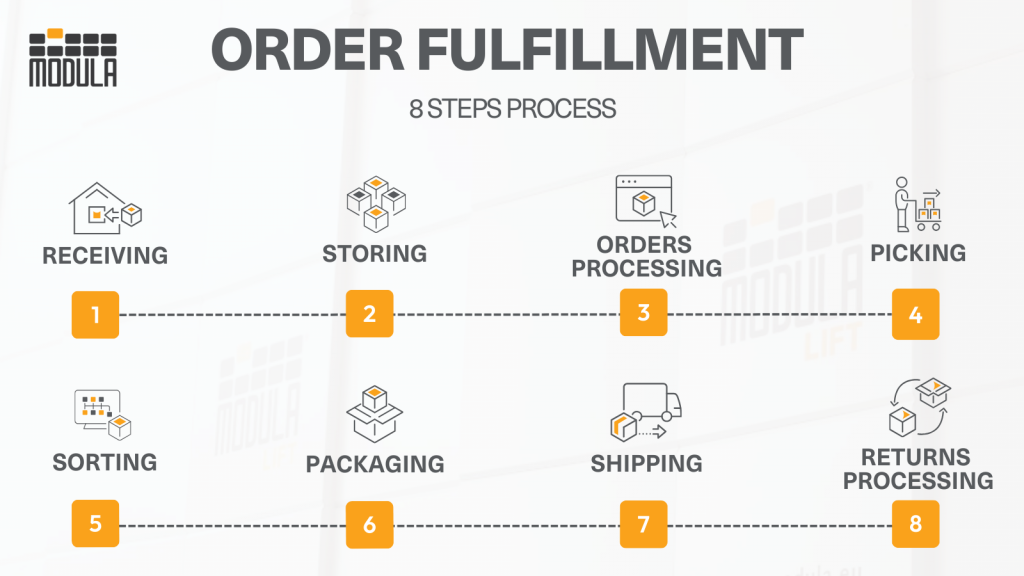
You upload the design to the fulfillment platform, which is connected to a product SKU and linked to your storefront or creator shop.
When your TikTok follower places an order, the platform receives the purchase data, produces the hat using the stored design file, packages it, and ships it directly to the buyer.
#2. Create Separate Funds: Personal Vs. Business
Managing your creator income from multiple sources requires separating business and personal funds to maintain financial control. Start by opening a business account that has all creator earnings.
Here’s what the business accounts do:
- – Every payout lands in one trackable location
- – Tax reserves can be transferred immediately
- – Software expenses and contractor payments remain linked to business activity
- – Profit can be measured without personal spending noise
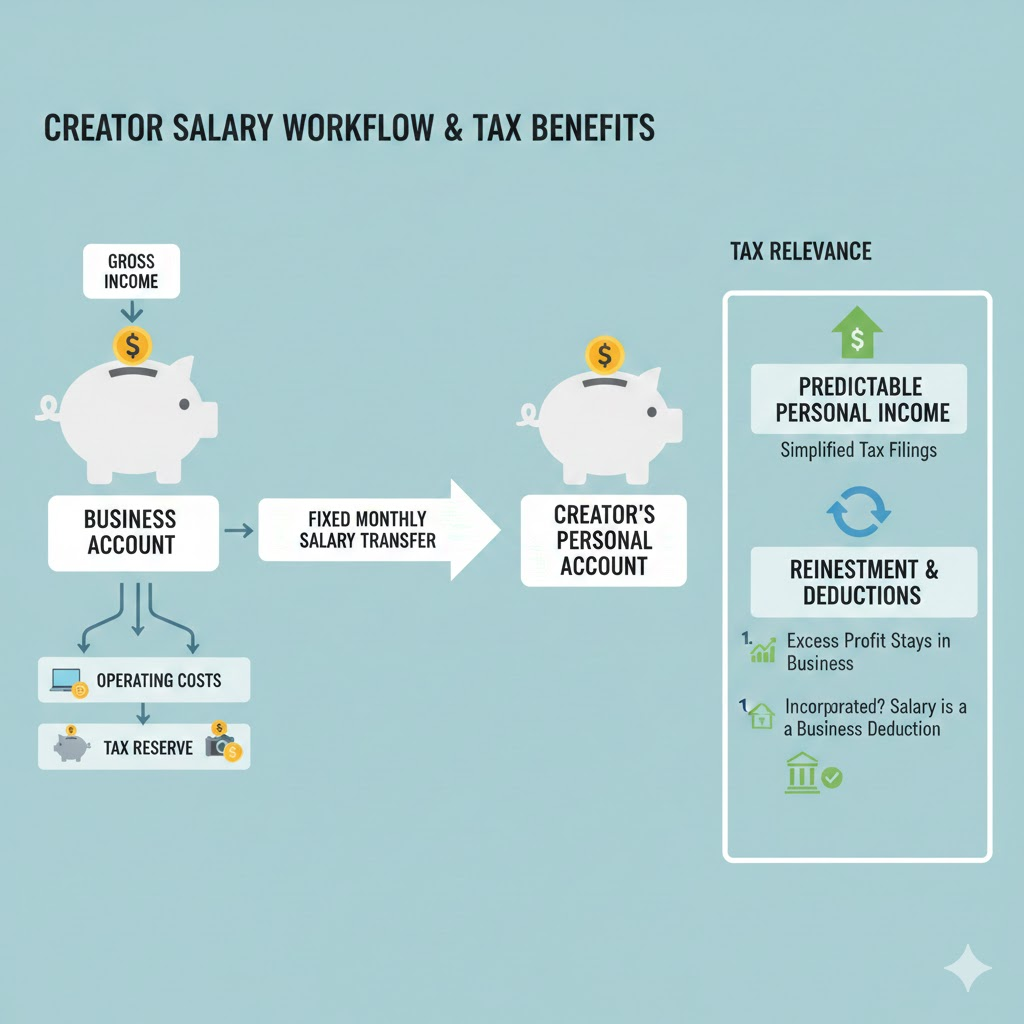
Paying Salary to Yourself
Next, pay yourself a salary rather than withdrawing funds as needed. This helps with tax planning by allowing you to withhold income tax and social security contributions throughout the year, preventing a large, unexpected tax bill in April.
To determine a sustainable rate, creators can consult a salary guide to benchmark their pay against industry standards for similar roles. This prevents a large, unexpected tax bill in April while ensuring your business remains profitable.
Here’s how it works when you credit your salary to yourself as a creator
The Creator Tech Stack for Income Management
When you separate personal and business accounts, it can be challenging to manage growth. For this reason, you need a specific set of tools that work together to route and track your capital.
Here’s a quick tool-check to get started.
#3. Implementing a Tax Sinking Fund
The idea behind creating a sinking fund for taxation is to set aside a portion of each payout to meet future tax obligations. For a creator, it serves as a self-withholding mechanism, since TikTok, YouTube, and brands pay you gross (the total before taxes).
Use the tax-sinking fund to pay taxes as a content creator by making sure you do not spend money that legally belongs to the government.
Follow the 30% Rule for Tax
The 30% rule is a provisioning method used to estimate tax exposure in advance, based on withholding tax rates. When income is deposited into your business account, a fixed percentage (30%) is transferred immediately to the tax reserve account.
This transfer happens before operating spend or salary withdrawals.
For starters;
- – Allocate between 25% and 30% toward income tax exposure
- – The exact percentage depends on total earnings, location, and filing status
- – The higher end of the range creates a safety buffer if income rises mid-year
Tracking Deductions
Start by tracking expenses related to business and use them to claim tax deductions. Document all the expenses incurred for operating their businesses, which can be deducted from your total income to reduce taxable income.
For example, if you earn $10,000 but spend $2,000 on gear, you are only taxed on $8,000.
Here are some of the common deductions.
- – Production Gear: Covers hardware used directly in recording or producing content. This includes equipment required to capture video, audio, or lighting setups.
- – Software: Covers digital tools used to edit, process, or publish content assets. These tools are necessary to convert raw footage into distributable media. If you host your course on a learning content management system, the subscription or licensing costs for that platform can typically be treated as a deductible software expense, since they directly support the delivery and distribution of your content.
- – Learning and Development: You can enrol in any of the courses that can help grow your business as a TikTok creator. Make sure you enrol in courses relevant to growing your business as a TikTok creator, as deductions apply only if the training directly supports content production or monetization.
- – Home Office: Covers the workspace used exclusively for content operations. Deduction is calculated as a percentage of the residential square footage allocated to work.
- – Logistics: Covers travel and accommodation expenses incurred while executing content campaigns or production shoots outside the primary workspace.
#4. Tax Jurisdictions and Presence
When you move from local TikTok payouts to selling physical products globally, the tax obligations shift from a single jurisdiction to regional laws. Managing this income requires recognizing that tax liability is no longer just about where you live, but also about where your customers and operations are located.
Say you live in the UK and earn $10,000 through brand partnerships. That income is taxed in the UK because it is treated as your business earnings where you reside.
Now switch the income source.
Production doesn’t happen in the UK. Instead, products created via print-on-demand platforms like Printful & Printify get manufactured inside U.S. fulfillment facilities, packaged there, and shipped to buyers across California.
That operational footprint introduces a second layer of tax exposure.
You still report the $10,000 as business income in the UK. Income tax stays tied to where you live.
However, California may require sales tax collection on those transactions once your sales volume in the state exceeds its economic nexus threshold, currently $500,000 in annual revenue.
Penalties
If you ignore these thresholds, you risk tax exposure when a state audits your sales and determines you should have been collecting a 7.25% of tax (California City & County Sales) over the last two years.
Since you cannot go back and ask your followers for that money, the state will bill your business for the entire amount plus interest, which can instantly wipe out your $10,000 profit.
To stay ahead of these penalties, monitor the thresholds for all 45 states that collect sales tax. For a detailed, state-by-state breakdown of the 2026 rules, refer to the Stripe Guide to US Sales Tax and Economic Nexus or the TaxCloud 2026 State Nexus Chart.
#5. Tracking Income by Source, Not Platform
Creators often review earnings based on the platform that issued the payout, grouping multiple income streams into a single deposit. But this prevents an accurate assessment of profit. A single transfer can include revenue from entirely different commercial arrangements.
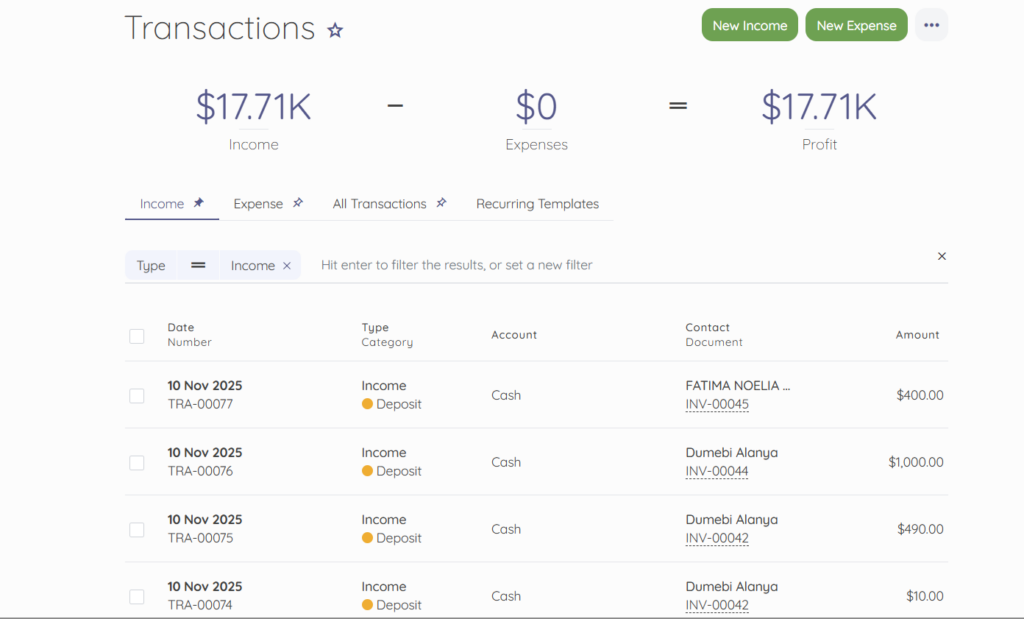
Separating incomes
Recording income at source means logging earnings based on how the money was generated, not where the payout came from. A single TikTok transfer can contain ad revenue, brand payments, or affiliate commissions.
Separating these inside your books shows which income streams actually produce profit and which carry costs or tax exposure. Integrating a CRM into this process can further improve clarity by linking customer interactions with revenue sources, giving creators better visibility into how relationships translate into income.
To do this:
- – Pull the payout report from TikTok Creator Center or partner TikTok report dashboards to see how the total payout breaks down across earnings types.
- – Match each payout component to its income category. Ad share goes under ad revenue. Sponsored campaign payments get under brand income. Affiliate earnings get logged separately.
- – Create individual income accounts in bookkeeping software, ideally by setting up categories for ad revenue, brand partnerships, affiliate commissions, merchandise sales, and digital products.
- – Split the bank deposit during reconciliation. Instead of recording a single $5,000 TikTok payout, allocate portions to the relevant income accounts.
- – Attach supporting documents to each allocation. Let the platform reports, affiliate dashboards, and brand invoices serve as audit-proof evidence of how the income was classified.
Bottomline
Hitting your first $10K on TikTok changes the nature of what you’re running. Once your creator income enters this zone, the burden of taxation and financial management is on you. The decisions you take here will define how your career as a creator on TikTok pans out.
A start would be what we discussed above. These systems and tips help retain control over your earnings. Without that structure, income moves in and out without building stability or future capacity.
As a creator, clarity matters more than complexity. Akaunting keeps your books structured without forcing you into enterprise-level software built for large corporations. It helps you see exactly where your money stands, so you can make decisions with confidence, stay compliant, and keep building without financial guesswork.
Author bio:
Rushali Das helps B2B SaaS companies grow organically through performance-led link-building strategies. By earning high-authority backlinks to relevant content assets, she improves search performance, drives qualified traffic, and supports MRR growth. Connect with her on LinkedIn to chat about SEO-driven SaaS growth.