
Expense Tracking for Content Creators: What You Can Write Off in 2026
Reading Time: 5 minutesContent creation has fully matured into a high-overhead industry.
If you’re still treating your production costs like a hobby, you’re likely overpaying on your taxes.
Whether you’re a social media influencer, Twitch streamer, or online influencer, understanding which costs qualify as deductible expenses is critical for reducing your tax burden.
The difference between a struggling creator and a profitable one often comes down to how effectively creators track their expenses
Between constant gear upgrades and the rising cost of digital subscriptions, your take-home pay can disappear quickly. The good news is that nearly every dollar you reinvest into your channel, stream, or brand can work to lower your taxable income, provided you have the records to back it up.
These tax deductions directly impact your tax return and overall tax payments, especially when you follow current IRS guidelines.
Whether you’re a YouTuber, podcaster, or digital artist, mastering expense tracking for content creators is the fastest way to protect your margins.
Here’s exactly what you can claim this year to keep more of what you earn.
Essential business expenses for creators: The 2026 checklist
While the tax code allows significant flexibility, the IRS requires that these expenses be both “ordinary” (common in your industry) and “necessary” (helpful to your business). Keeping clear documentation to support these claims is essential, which is why many creators rely on software for expense management to track, categorize, and store records year-round.
Here’s the 2026 checklist of essential business deductions you should be tracking to protect your bottom line.
Production hardware
The line between personal gadgets and professional tools is thinner than ever. To maximize your content creator tax savings, you must categorize your overhead into clear, deductible buckets. Every piece of equipment used to capture content and every subscription used to edit it qualify as business expenses for creators.
– Smartphones used for filming: If you use a dedicated phone for mobile filming, social media management, or BTS content, the device cost and a portion of the service plan are deductible.
– Support gear: This includes microphones (lavalier and shotgun), studio lighting kits, tripods, and gimbal stabilizers.
– DSLR/mirrorless cameras: High-end bodies and lenses used for primary filming.
Workstation and tech
Your “engine room” is just as vital as your camera. Anything that touches the post-production process counts:
– High-performance computers: Desktops or laptops with the GPU power required for 4K/8K video rendering.
– Monitors: Dual-screen setups or color-accurate displays used specifically for editing and color grading.
– Ergonomic setups: Standing desks, professional-grade office chairs, and specialized keyboards used in your dedicated workspace.
Editing and design software
In a digital-first creator economy, your virtual tools are just as deductible as your physical ones.
– Video and graphic tools: Monthly or annual subscriptions for tools like Adobe Creative Cloud, DaVinci Resolve, or Canva.
– AI content tools: 2026 is the year for the AI workflow. Subscriptions for AI voiceovers, automated captioning, and generative image tools are fully deductible as professional software.
– Cloud services: Fees for hosting raw footage, project backups, and file-sharing services (e.g., Dropbox, Google Drive).
Studio and backdrop expenses
Your studio space doesn’t have to be a commercial warehouse to qualify for deductions.
– Backgrounds and props: Seamless paper, fabric backdrops, and any physical items purchased exclusively to appear in your content (e.g., products for review or set dressing).
– Dedicated furniture: Desks, shelving, and gear racks used in your filming area.
– Acoustic treatment: Soundproofing foam, bass traps, and curtains are used to improve audio quality.
Often overlooked tax write-offs
While gear and software are the obvious deductions, the hidden costs of running a digital brand in 2026 can be saved if documented correctly.
Marketing and growth
– Paid social campaigns
– Email marketing platforms
– SEO research tools
The home office
The home office deduction is one of the most powerful tools for creators. To qualify, your studio or editing nook must be your principal place of business and used only for work.
What you can deduct:
– Portion of rent or mortgage interest
– Utilities and internet
– Repairs related to office space
You must choose between the simplified and actual expense method. With simplified expense, you deduct $5 per square foot (up to 300 sq ft). The simplified method is best for small setups or for those who want to avoid heavy record-keeping.
The actual expense method means you track every bill and calculate the exact percentage. This typically results in a much larger deduction in high-cost-of-living (HCOL) areas.
Website and hosting
– Domain registration
– Platform revenue and fees
– Hosting fees
– Email marketing platforms
Branding and design
– Logo design
– Website development
– Professional photography
Travel and events
– Expenses for creator conferences
– Networking events
– Location-specific filming trips
Educational and professional development
– Online courses related to your niche
– Conferences and creator events
– Industry memberships
– Subscriptions to trade publications
Professional services (contractors and outsourcing)
– Video editors
– Virtual assistants
– Accountants and tax professionals
– Legal services
– 1099 reporting requirements
Pro Tip: For 2026, the federal threshold for issuing a Form 1099-NEC has risen to $2,000. Make sure you collect a Form W-9 from every contractor you pay before their first check.
Everyday expenses
– Internet bills
– Phone bills (percentage-based deduction)
– Bank fees
– Payment processor fees
– Office supplies
– Shipping and packaging
Expenses you can’t write off
Avoid red flag deductions that can trigger an audit:
– Personal clothing (unless specialized and not wearable daily)
– Personal grooming
– Family travel disguised as business
– Mixed-use expenses without allocation (e.g., trying to deduct 100% of your phone bill when you use it for personal calls)
Reporting your creator income in 2026
Most creators will report their earnings on Schedule C as part of their Form 1040. This is where you calculate your net profit by subtracting your expenses from your gross income.
Remember that you’re responsible for both income tax and the 15.3% self-employment tax (which covers Social Security and Medicare).
Streamlining your finances
From choosing the right business structure to separating your bank accounts, here’s how to professionalize your creator brand.
Track your expenses
Tracking dozens of small expenses throughout the year can be overwhelming without a system in place. A dedicated budgeting app can help creators manage personal spending, categorize transactions automatically, and ensure nothing deductible gets missed when tax season arrives.
However, as your revenue grows, you’ll likely find that a simple budgeting app isn’t enough to satisfy the IRS or your own growth goals.
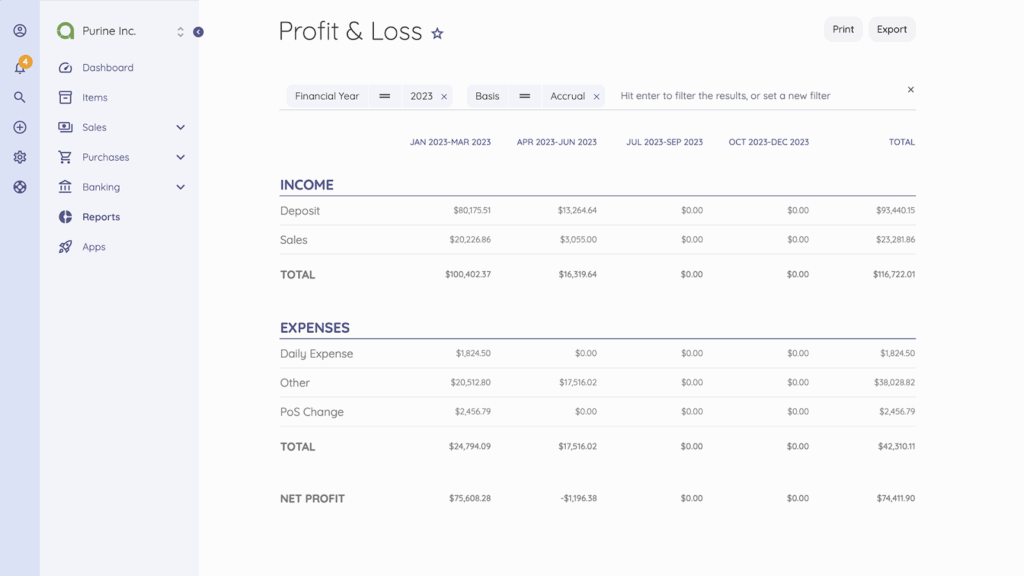
Consider using dedicated accounting software. Unlike a standard budgeting tool, professional accounting software allows you to generate profit and loss (P&L) statements, manage multi-currency payouts from global platforms, and bridge the gap between tracking spend and running a business.
Business formation and startup costs
Many creators eventually formalize their work by setting up a legal entity, and the cost of incorporating a company may be deductible depending on how the business is structured.
Formation fees, state filings, and related administrative expenses can often be treated as startup costs rather than personal spending, making accurate records especially important.
Separate business finances
The number one rule for creators in 2026: Stop co-mingling funds. Open a dedicated business bank account. Whether you use cash or accrual accounting, having a clean, separate feed of your business transactions makes tax time effortless.
Future-proof your creative business
Identifying business expenses for creators is the most direct way to increase your net profit without landing a single extra brand deal or increasing your view count. Tracking these expenses helps you lower your taxable income.
But remember, the goal isn’t just to track what you’ve spent. It’s to use those insights to reinvest in the gear, software, and talent that will scale your brand to the next level.
Don’t leave money on the table. Join thousands of small business owners using Akaunting to manage their business expenses effortlessly.
Author Bio: