
Restaurant Accounting 101: Bookkeeping and Compliance Tips for Food Businesses in 2026
Reading Time: 9 minutesGood food brings people in, but clean numbers keep the restaurant running. Accounting shows whether the business has enough cash for inventory, payroll, rent, suppliers, and compliance obligations.
It needs to be part of the daily rhythm, because waiting until month-end often means finding problems after they have already cost you money.
Clean books help you see what is really happening. They show when labor is too high for the sales you are bringing in, when food cost is drifting, when cash is getting tight, and when a busy week still did not produce enough profit.
In this guide, we’re breaking down the accounting routines, compliance issues, cost controls, and practical bookkeeping habits that help restaurants make better financial decisions day to day.
Understanding the basics of restaurant accounting
Restaurant accounting has its own rhythm. A few numbers deserve more attention than others because they affect almost every decision you make.

Image source: Freepik
Here are the terms restaurant owners should understand first:
- – Prime cost: Food cost plus labor cost. This is usually the number operators should watch most closely because it shows how much of your sales are being consumed by the two biggest operating costs.
- – Cost of goods sold: In restaurants, this usually includes food, beverage, liquor, paper goods, disposables, and other direct costs tied to serving customers.
- – Chart of accounts: The categories used to organize your financial reports. A restaurant-specific chart of accounts makes it easier to see where money is coming from and where it is going.
- – 4-4-5 calendar: A retail-friendly accounting calendar that groups reporting periods into four weeks, four weeks, and five weeks. Many restaurants use it because it makes weekly comparisons cleaner across busy and slow periods.
- – Accrual vs. cash basis: Accrual accounting records revenue and expenses when they are earned or incurred. Cash basis records them when money actually moves. Many restaurants benefit from accrual accounting because inventory, vendor bills, payroll, and delivery payouts often do not land neatly in the same period.
Restaurant accounting is different because the business moves quickly. There are hundreds of small transactions, tipped wages, service charges, spoilage, waste, refunds, discounts, and third-party delivery fees. A restaurant can look busy and still lose money if the books do not clearly show food, labor, and cash.
Key accounting tasks for restaurants
You do not need a complicated process to keep restaurant finances under control. However, you need clear routines that show what happened today, what changed this week, and what needs to be reviewed before the month is closed. You should focus on the following core routines:
Daily tasks
Close out the POS, reconcile cash and credit card settlements, record deposits, update tip payouts, and log comps, voids, discounts, promos, and refunds.
This is where control starts. If cash is short, a deposit is missing, or a credit card batch does not match the POS, you want to know the next morning, not three weeks later.
Gregor Emmian, Deputy Chief Digital Growth Officer at Rise, relies on clean daily data in his own work to understand what is moving, what is slipping, and where decisions need to be made. He sees the same discipline as essential in restaurant accounting.
He puts it simply: “The longer a discrepancy sits, the harder it becomes to understand what actually happened. Daily reconciliation keeps the story fresh. It gives operators a clear view of where sales, deposits, refunds, and card settlements stand, so small issues do not quietly turn into bigger cash flow or reporting problems.”
Weekly tasks
Count inventory for key items, post vendor bills, verify hours and tip pools before payroll, review prime cost, and compare theoretical food cost against actual food cost. If you use inventory software, this is where a tool like inventory management can help keep counts, purchases, and cost changes easier to follow.
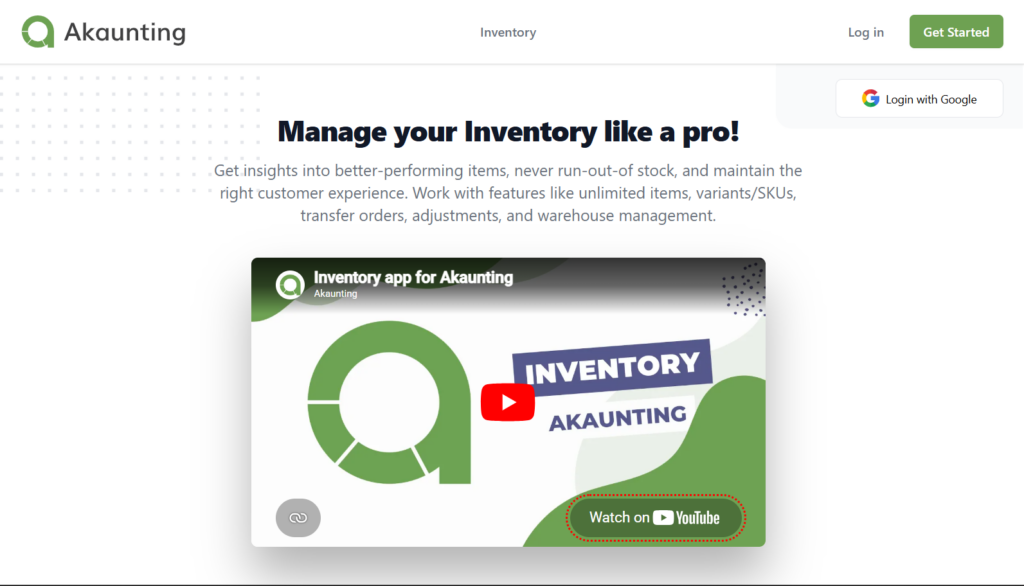
For restaurants that want a cleaner way to track stock movement, product costs, and purchasing, the inventory app of Akaunting is a useful place to start. It helps keep inventory management closer to your accounting workflow, so weekly counts are easier to review, and cost changes are easier to catch before they distort your food cost.
A weekly mini close is worth the effort. You do not need a perfect monthly financial package to know whether food cost is creeping up or labor is out of line. You need enough reliable data to act while the week is still fresh.
Prime cost deserves special attention. Targets vary by concept, but many full-service restaurants aim for the low 60s as a percentage of sales, while some quick-service models run lower. The exact number matters less than the trend. A steady climb should trigger questions about scheduling, portioning, waste, vendor prices, or menu mix.
Monthly tasks
Reconcile bank and credit card accounts, complete a full inventory count, finalize sales tax filings, review the P&L by location and daypart, and lock the period once the numbers are reviewed.
Monthly review is also a good time to check active vendor agreements, lease terms, maintenance contracts, and delivery platform arrangements. Keeping those records organized through contract management software helps operators track renewal dates, payment terms, and pricing changes before they affect cash flow.
Cash flow needs the same discipline as profit. A restaurant can show profit on paper and still struggle if vendor bills, payroll, rent, and tax payments hit at the wrong time. A rolling 13-week cash forecast helps you see pressure before it becomes a scramble.
Inventory also needs consistency. Count on the same schedule, use waste logs, test yields, and compare what should have been used against what was actually used. It is not exciting work. It pays off fast. Payroll needs careful handling, too. Track hours accurately, follow overtime rules, classify service charges correctly, and reconcile tips daily.
Bookkeeping tips for restaurateurs
Restaurant bookkeeping gets messy when systems do not talk to each other. POS reports live in one place, payroll in another, vendor bills in another, and bank deposits somewhere else. That setup creates manual work and more room for mistakes.
Since Jeffrey Zhou, CEO and founder at Fig Loans, operates in a finance-led environment where accurate data and clean workflows matter, he sees integration as more than a convenience.
“From experience, disconnected systems create the same problem over and over: people spend too much time checking numbers that should already match. When POS, payroll, inventory, and accounting tools work together, teams spend less time fixing entries and more time understanding what the numbers are saying. That is where faster decisions come from,” Zhou notes.
Here are practical ways to keep the books cleaner:
- – Choose accounting software that integrates with your POS system, payroll, timekeeping, and inventory tools. Bank feeds should also include reliable rules to ensure recurring transactions are coded consistently.
- – Digitize invoices, receipts, vendor statements, and payroll records. Paper gets lost. Screenshots get buried. A simple document capture process makes month-end easier.
- – Use purchase orders for major vendors and match the PO, invoice, and receipt before payment. This helps catch overbilling, missing items, and price changes that nobody approved.
- – Lock daily sales after review. If someone edits sales after the close, you need a clear trail. Use an over/short account to track recurring cash differences.
- – Separate revenue categories. Dine-in, takeout, delivery, third-party delivery, catering, and gift cards should not all sit in one sales bucket. You also need separate tracking for comps, promos, discounts, and voids.
- – Track COGS by category. Food, nonalcoholic beverages, beer, wine, liquor, paper goods, and disposables should be separated so cost spikes are easier to trace.
- – Split labor into front-of-house, back-of-house, and management. Where possible, separate prep labor from line labor so scheduling decisions are easier to evaluate.
- – Payroll tools can also help keep labor reporting cleaner, especially when restaurants need to track hours, roles, overtime, and recurring pay details across teams. Akaunting’s payroll app is a relevant example to show here because labor is one of the biggest numbers in restaurant accounting.
- – Collect W-9s upfront and set 1099 flags correctly for vendors. Year-end reporting becomes much easier when vendor records are clean from the start.
Your chart of accounts should reflect how the business is actually managed. Start with revenue by channel, then COGS by category, then labor buckets, followed by controllable costs like repairs, linen, janitorial, and supplies. Non-controllable costs like rent, insurance, and property tax should sit separately. Keep the structure detailed enough to help decisions, but not so detailed that nobody uses it.
Cost control and financial analysis
A restaurant owner does not need a 40-page financial package to improve margins. They need reliable numbers that show what changed, why it changed, and what to do next.
Here are the financial areas that deserve the most attention:
Financial tracking and benchmarking
Review your P&L weekly, even if the formal close happens monthly. Focus on prime cost, controllable expenses, occupancy cost, and profit by sales channel. Compare results to last week, the last period, and the same period last year.
Do not only look at totals. A strong sales week can hide weak margins. A slow week can still be profitable if labor and ordering are controlled well. The value comes from seeing the relationship between sales, food, labor, and operating expenses.
Budgeting and cash flow planning
Budgeting does not need to be complicated. A rolling 13-week cash forecast, a 12-month labor and COGS budget, and a simple weekly variance review can give operators enough visibility to make better calls.
Use sales reports to shape staffing, prep, and ordering. If Tuesday lunch has been soft for six weeks, the schedule and prep list should reflect that. If catering sales are rising, the budget should show the extra labor, packaging, and delivery costs attached to that growth.
Menu engineering and operational efficiency
Menu engineering connects recipe cost, sales mix, prep time, waste, and margin. Some menu items look popular but quietly hurt profit because they require too much labor or produce too much waste. Others sell less often but carry strong margins.
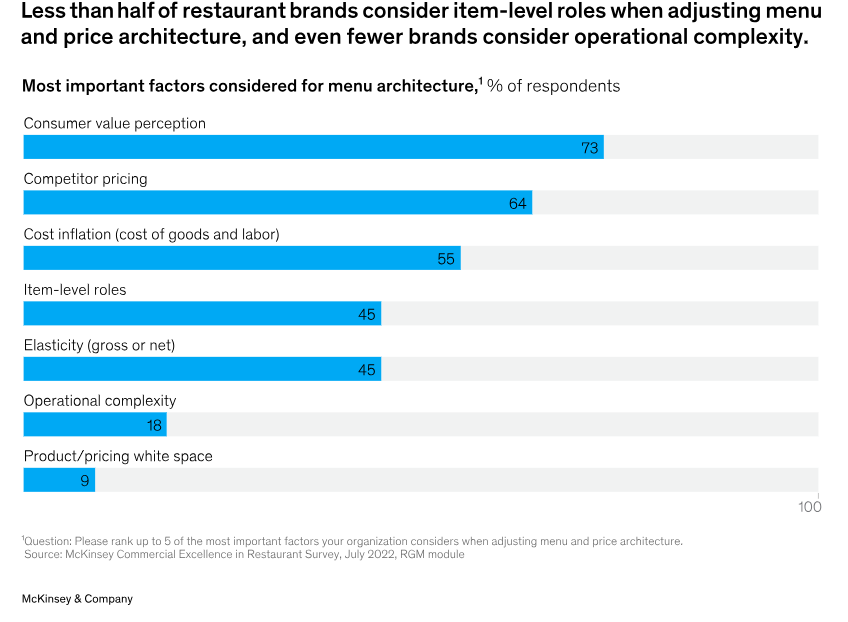
McKinsey’s restaurant survey found that only 18% of brands consider operational complexity when adjusting menu and price architecture. That is a costly blind spot because a dish can look profitable on paper while still hurting the kitchen through prep time, waste, bottlenecks, and labor pressure.
That is where practical menu changes become easier to justify. Promote high-margin items that already sell well. Reprice items when ingredient costs move. Retire dishes that slow down the kitchen without adding enough profit. If late-night snacks sell well but tie up the grill, consider prep-friendly options or adjust pricing to account for the added labor.
Challenges and opportunities in restaurant accounting 2026
Restaurants in 2026 still juggle tight labor markets, rising input costs, and fee-heavy delivery channels. Common headaches are:
- – Knowing the difference between a service charge and a tip
- – Reconciling third-party delivery payouts, fees, refunds, and chargebacks
- – Shrink and waste pushing food cost higher than expected
- – Schedules that do not match sales patterns
- – Late vendor bills that distort COGS timing
The opportunity is that better tools now make these issues easier to see. POS-accounting integrations, inventory systems, recipe costing tools, and forecasting software can help restaurants reduce manual work and respond faster. AI-driven forecasting can also support labor planning and ordering, although operators still need to review the numbers with real-world judgment.
Grant Aldrich, founder of Preppy, regularly makes decisions where pricing, demand, and operating costs have to be read together, which is why he sees early visibility as essential for any business with tight margins.
He shares, “I do not look at margin pressure as one isolated number. It usually comes from several small movements happening at the same time. Costs rise, demand shifts, the work behind delivery gets heavier, or certain offers stop performing the way they used to. When those signals are connected early, the next decision becomes clearer and less reactive.”
Dynamic pricing is slowly appearing in casual and quick-service concepts. It needs care. Guests notice when pricing feels unfair or confusing. Used carefully, it can help balance demand during peak and slow periods, but it should never replace clear value and trust.
Growth also does not have to mean opening another location. Catering, pop-ups, first-party delivery, wholesale, and events can all create new revenue streams. The key is tracking each channel separately. When you can see margin by channel, you know where to invest and where to pull back.
Wrapping up
Restaurant accounting works best when it becomes part of the operating rhythm. Close the day properly. Review prime cost weekly. Keep vendor bills current. Reconcile cash and card settlements. Track tips carefully. Separate revenue by channel. Document the areas that attract scrutiny, especially tips, employee meals, donations, payroll, and tax records.
The restaurants that perform well in 2026 will not be the ones that create more paperwork. They will be the ones that trust their numbers enough to make faster, calmer decisions. Start with one improvement, whether that is a tighter daily close, a cleaner chart of accounts, a better POS integration, or a more useful cash forecast.
If you need help organizing your restaurant books or want accounting software that keeps payroll, inventory, reporting, and compliance easier to manage, check out Akaunting and start building a cleaner system today.
Author Bio

Dylan Myers is a financial advisor with over 20 years of hands-on experience in guiding clients toward financial stability. Dylan crafts insightful articles on diverse financial topics, offering valuable advice to readers seeking to navigate the complexities of personal finance.