

From Freelancer to Agency: Financial Systems That Scale Without Complexity
Reading Time: 9 minutesThere is a point where freelancing starts to feel different.
At first, a full inbox feels exciting. More proposals. More client calls. More invoices to send. Then the work keeps coming, and suddenly the simple system that got you here starts feeling shaky.
You are tracking expenses in one place, invoices in another, and receipts in a folder you keep meaning to organize. Then you land a retainer. You bring in a contractor. You take on a few more clients.
That is usually when it becomes obvious.
The setup that worked for one person does not always hold up when the business starts acting like a small agency.
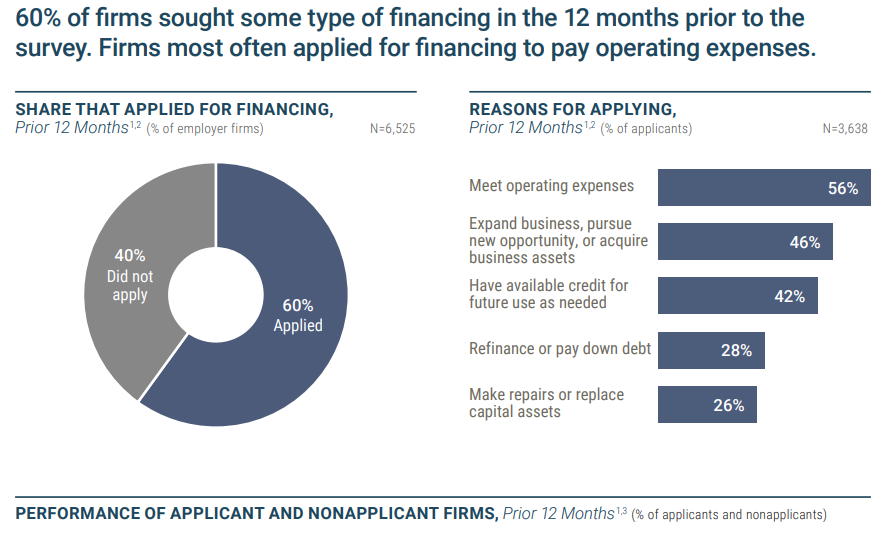
Growth does not usually break because the work disappears. It breaks because the moving parts multiply, and the Federal Reserve’s 2026 Small Business Credit Survey found that 60% of small employer firms sought financing in the 12 months prior to the survey, with 56% doing so to cover operating expenses.
For freelancers moving toward an agency model, that is the warning sign. Once payroll, contractors, retainers, and client deadlines start stacking up, scattered numbers make every decision harder.
This guide walks through the changes that occur when you move from solo to agency, and how to build financial systems that can keep up. Not a giant enterprise stack. Not process for the sake of process. Just the tools, integrations, people, and habits that help the business stay steady as the work gets bigger.
Understanding the challenges of scaling from freelancer to agency
Before you add new software, it helps to understand what actually changes.
The work may look similar from the outside. You still serve clients. You still deliver projects. You still need to get paid.
But underneath that, the financial pressure changes.
There are usually two shifts that make scaling feel heavier than expected:
Freelancer financial systems
Most freelancers start with simple, scrappy tools.
A spreadsheet for income and expenses. Invoice templates. Bank statements downloaded at the end of the month. A folder of receipts. Maybe a reminder for quarterly taxes.
When you are the only person doing the work, this can be enough.
You know which client owes you money. You know which project took too long. You know what is coming in next week because most of it lives in your head.
That works until it does not.
The problem is that these lightweight systems depend too much on memory. They also hide useful signals. You might know you are busy, but you may not know which services are actually profitable. You might feel like cash is tight, but you may not see the shortfall coming until it is already a problem.
When it is just you, you can muscle through. When you are growing, those cracks get louder.
Increased complexity when scaling
Once you add clients, projects, retainers, and teammates, the math starts multiplying.
Cash flow becomes harder to read because money arrives in different ways: deposits, milestone payments, retainers, late invoices, and partial payments. Payroll and contractor payments bring new deadlines. Billing starts to vary by client, with purchase orders, net terms, different currencies, and approval chains.
Then reporting changes too.
You are no longer only asking, “How much is in the bank?” You are asking which client has the best margin. Which service line is worth expanding? Whether your team is overbooked. Whether you can afford another hire. Whether the next slow month will hurt.
What felt like extra admin when you were solo becomes the backbone of an agency that runs on time and gets paid on time.
Essential financial systems for scaling
A growing agency does not need a complicated finance stack right away, but it does need systems that remove repeat work and make money easier to track. These are the core financial systems that help keep growth organized without adding unnecessary friction:
Automated accounting software
Automated accounting is the foundation. Akaunting has features that handle day-to-day transactions, reconcile bank feeds, and generate real-time reports without hours of manual entry.
With rules for categorizing expenses, recurring journal entries, and a clean chart of accounts, your numbers stop living in scattered files.

You get a clearer view. Not perfect. Not magic. Just current enough to make better decisions.
That matters because agency expenses can get messy quickly. A contractor payment is different from software. Ad spend is different from office costs. Custom T-shirts for a client event may need to be tracked against a specific project, not buried in a general expense category.
When those details are coded properly, they stop being noise. They become useful.
Automated accounting gives you a current picture of profit and loss, balance sheet, and cash flow when you need it. That is how you spot scope creep early, price new work with more confidence, and decide whether the next hire is realistic.
It also makes the month-end feel less like a punishment.
Advanced invoicing systems
Billing gets more complicated the moment you add retainers, deposits, or project milestones.
A strong invoicing system lets you set up recurring invoices and retainers, automate reminders and late fees, accept online payments in multiple currencies, track partial payments and deposits, and sync invoices and payments into your accounting automatically.
This is not just about saving time. It is about keeping cash from drifting.
If invoicing is separate and manual, your accounts receivable aging can creep up quietly. One client pays late. Then another needs a revised invoice. Then a payment lands, but nobody marks it properly. Suddenly the bank balance is lower than expected, even though the work was done weeks ago.
When invoicing is integrated, the business breathes a little easier. You collect faster. You chase less. You spend fewer afternoons asking clients for payment updates.
Comprehensive payroll solutions
Payroll is where many agencies realize they need a more serious setup.
And for good reason.
A solid payroll solution handles employee compensation, contractor payments, deductions, taxes, and filings while keeping you compliant. Cloud-based options also make it easier to add people, manage benefits, and standardize approvals as the team grows.
This is one area where improvising gets risky.
A late invoice is annoying. A payroll mistake can damage trust quickly.
Bryan Henry, President of PeterMD, built financial systems in a healthcare business where growth, compliance, and trust have to move together.
He says, “We started with core accounting and invoicing modules, then added payroll and advanced reporting as the business grew. The right platform works like a set of building blocks. We only add complexity when the operation actually needs it. That keeps costs manageable and makes sure the systems support growth instead of getting in the way.”
That is the right way to think about it.
You do not need everything on day one. You need a setup that does not collapse when the next layer arrives.
Choosing the right financial tools
The best financial tool is not always the one with the longest feature list.
That matters because long feature lists can hide a simple problem: nobody on the team wants to use the thing.
The right software should fit the way your agency actually works now, while still leaving room for where the business is going next.
Here is where to start:
Evaluating software based on business needs
Start with your workflow, not the sales page.
Map how money moves through your agency: proposal, contract, deposit, project work, invoice, payment, reporting. Then look for the slow spots.
Where does the team repeat the same task? Where do mistakes happen? Where does information get copied from one tool into another? Where do you lose visibility?
That is where the right tool should help.
Maybe you need cleaner reporting. Maybe you need stronger invoicing. Maybe you manage client campaigns that include ad spend, contractor hours, blank apparel for merchandise runs, and printing costs, and you need to separate pass-through costs from your own operating expenses.
Those details matter.
Look for clear, actionable reporting, not just attractive charts. Look for simple setup and migration paths. Check integrations with your CRM, time tracking software, and payment processors. Make sure user permissions match how you delegate work. Watch pricing too, especially what happens after the first year.
You want something your team will actually use.
Not something that requires a six-week training curve before anyone can send an invoice.
Scalability and customization
Your toolset should grow like your agency: in stages.
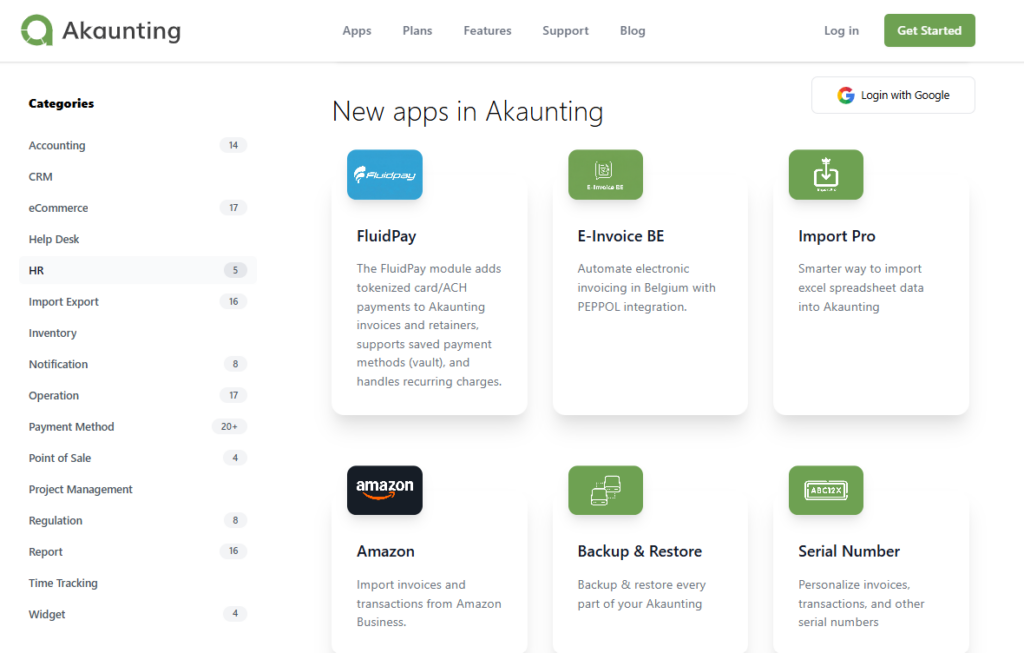
Modular systems, like Akaunting’s apps, let you start with core accounting and invoicing, then add payroll, advanced reporting, or multi-currency when you need it. Custom fields, workflows, and API access help you shape the system around the agency without building everything from scratch.
That flexibility matters because agencies do not all scale the same way.
One agency adds a media buying team. Another starts managing production vendors. Another opens a second entity. Another begins working with international clients and suddenly needs better currency handling.
A customizable setup gives you room to adjust without ripping out the whole finance stack halfway through growth.
That kind of disruption is expensive. It is also avoidable.
Integrating financial systems for seamless operations
Even strong tools can create problems when they sit apart from each other.
A good accounting platform helps. A good invoicing system helps. Payroll helps too.
But when each one holds a different version of the truth, the team ends up doing the same work twice. That is where integration matters.
Below are the key areas to focus on when connecting your financial systems into one clearer workflow:
Centralizing financial data
Silos create rework and errors.
Accounting, invoicing, payroll, time tracking, and your CRM should share data. When systems talk to each other, you reduce double entry, keep client records cleaner, and shorten the month-end close.
This does not have to be overbuilt. A clean integration plan usually starts with a few basics: one source of truth for the chart of accounts, consistent naming for clients and projects, and a monthly close checklist that everyone understands.
Whether you connect tools through native integrations, Zapier, or an API, the goal is the same.
You want one coherent view of money in, money out, and what is coming next.
Using financial dashboards
Dashboards are useful when they answer real questions.
Not vague ones. Practical ones. How much cash runway do we have at the current burn rate? Which clients and services deliver the best margins? What is our AR aging? What collections are expected this week? Are we hitting utilization and average billable rate targets?
Those answers change how you manage the agency. You price better. You staff better. You catch problems earlier.
Without dashboards, many agencies only understand what happened after the month closes. By then, the decision window is already smaller.
Real-time reporting does not remove judgment. It gives your judgment better timing.
Maintaining compliance and security
As you grow, compliance stops being optional.
Payroll taxes, contractor classifications, sales tax and VAT, and data privacy rules. Each one adds risk if the business is still running on spreadsheets and memory.
Modern finance tools can help, but only if you set them up properly.

Image source: Unsplash
Pick vendors that support two-factor authentication, role-based access, and clear audit logs. Make sure exports are easy. Make sure backups are routine. Make sure you can prove who changed what and when.
This matters during audits, but it also matters during normal team changes.
People leave. Roles shift. Contractors come and go. A secure system gives you a backstop when access needs to change quickly.
Better records also help your accountant review what supports a valid tax deduction and what needs to be handled differently. That does not mean every expense automatically qualifies. It means the documentation is cleaner, the categories are easier to understand, and the business is not scrambling later to explain what happened.
That is the point of good compliance systems. They reduce panic.
Building a financial team
Tools do not run themselves.
As your agency scales, you need people who understand what the tools are supposed to show.
A bookkeeper keeps the engine steady. They manage the monthly close, reconcile accounts, and make sure transactions are not piling up in the wrong place.
A tax-focused accountant handles filings, entity structure, and jurisdictional questions. This becomes more important as your agency takes on contractors, works across locations, or adds new types of services.
Then, as the business gets more complex, a part-time or full-time financial analyst can help with forecasting, pricing strategy, and scenario planning.
You do not need the whole team on day one. Start lean. Add roles when the workload and complexity make the case for it.
That is usually better than waiting until the owner is buried in admin and guessing through every decision.
What happens next
Scaling from freelancer to agency is not about adding layers of process just to look more mature.
It is about visibility.
Automated accounting keeps your numbers current. Smart invoicing pulls cash forward. Integrated payroll reduces stress and risk. Dashboards show what is happening while there is still time to act. A good financial team turns all of that information into better decisions.
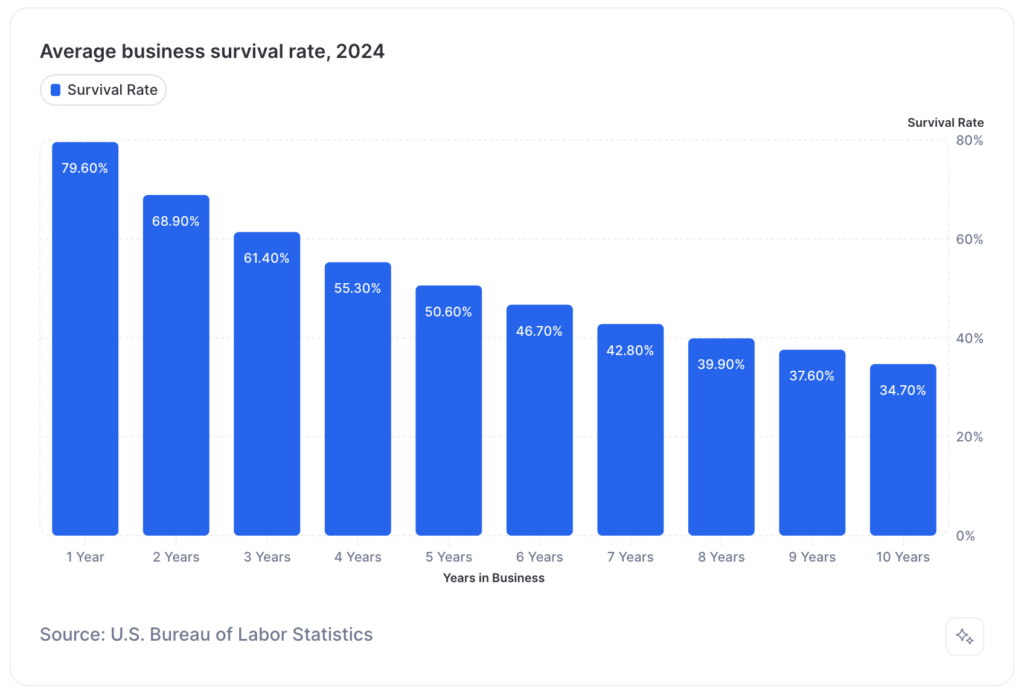
The U.S. Bureau of Labor Statistics reports that about half of new businesses don’t make it to five years. You do not beat those odds with heroics alone.
You beat them with visibility, habits, and tools that scale.
Start with the basics. Add what you need when you need it. Keep the stack simple so you can focus on the work that wins clients and keeps them.
Map your money flow this week, from proposal to payment, and circle the manual steps that slow you down. If your current tools cannot grow with you, it may be time to upgrade.
Explore resources and modular apps at Akaunting to see how a scalable setup can support your next stage. Start with core accounting and invoicing, then add payroll and reporting when you’re ready.

Author Bio:
Dylan Myers is a financial advisor with over 20 years of hands-on experience in guiding clients toward financial stability. Dylan crafts insightful articles on diverse financial topics, offering valuable advice to readers seeking to navigate the complexities of personal finance.