
April 2026 Round Up: Invoicing Growth, User Activity, and Top Akaunting Apps
Reading Time: 5 minutesSmall businesses are moving faster toward automation, especially in areas that reduce manual admin work. Recent AI adoption data lists bookkeeping and invoice processing among the fastest-growing small-business use cases, with a reported 67% increase in adoption.
The broader trend is also supported by U.S. Chamber of Commerce data showing that 58% of small businesses used generative AI in 2025, up from 40% in 2024, while 96% planned to adopt emerging technologies. (Searchlab)
That shift makes sense. For many business owners, invoicing is not just about sending a payment request. It affects cash flow, customer communication, tax records, reporting, and how quickly money returns to the business.
That is where Akaunting’s invoicing features help. You can create and send unlimited invoices, automate payment reminders, track cash inflow, manage customers, use multiple currencies, and reduce the manual work that usually slows down accounts receivable.
Here is what happened across Akaunting in April.
April User Growth: Where Akaunting Grew the Most
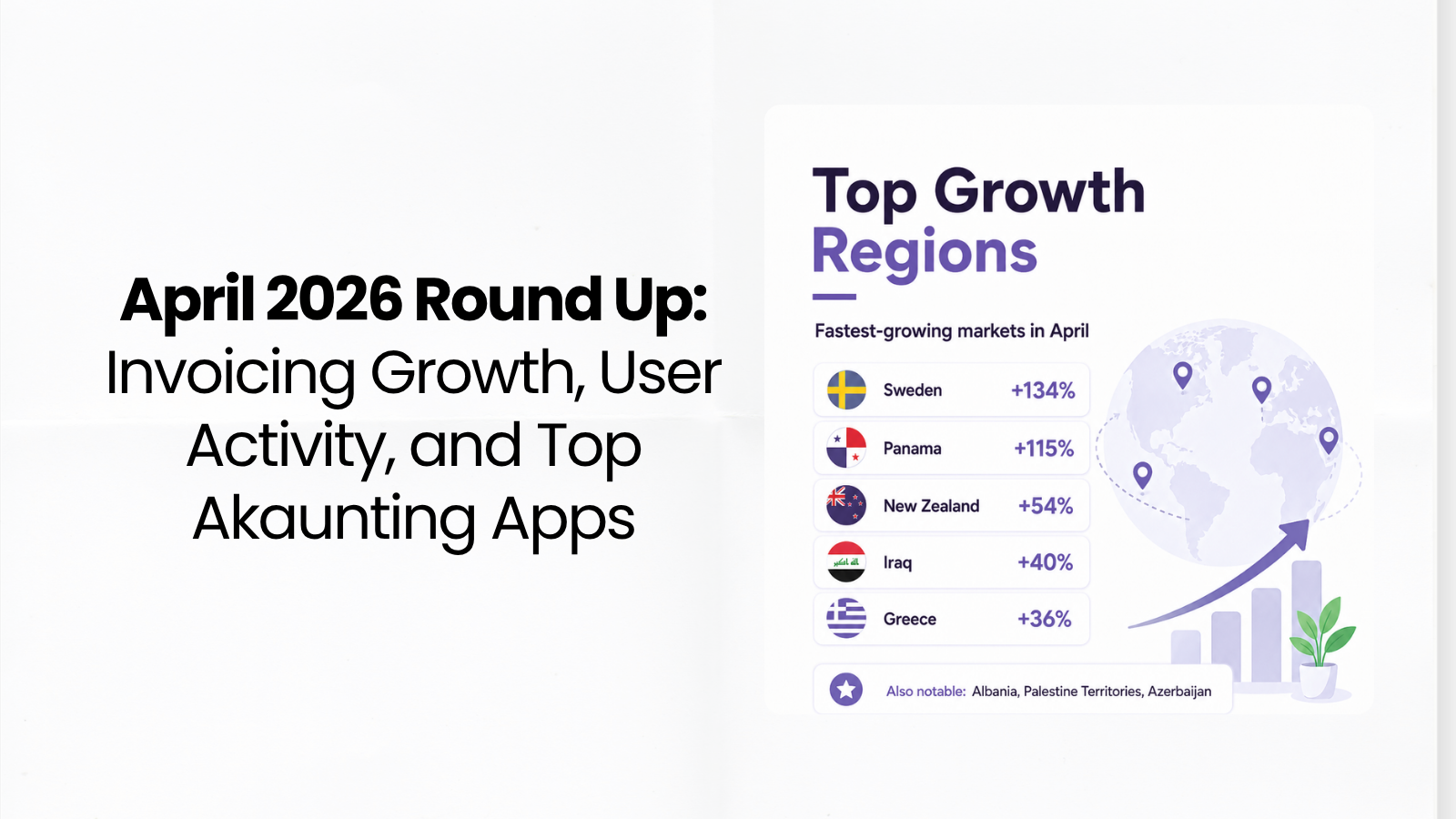
April brought strong user growth across several regions, with Sweden and Panama leading the month.
Top Growth Regions
| Region | Growth |
| Sweden | +134% |
| Panama | +115% |
| New Zealand | +54% |
| Iraq | +40% |
| Greece | +36% |
There were also notable increases from Albania, Palestine Territories, and Azerbaijan.
The high growth in Sweden and Panama is especially interesting because both regions crossed the 100% mark compared to the previous month. When a market grows this quickly, it usually suggests one of three things: increased brand discovery, stronger product fit for local business needs, or a smaller starting base that expanded rapidly after new users joined.
For Akaunting, this reinforces one of the most important patterns in small business accounting software: businesses across different markets often want the same outcome, but for slightly different reasons. Some need better invoice tracking. Some need cleaner payment records. Others need multi-currency workflows or a simple way to manage customer and vendor activity without spreadsheets.
What Users Did Most in April
April’s activity data shows that users were not only logging in. They were taking actions tied directly to billing, payments, and workflow personalization.
Create Retainer Transaction: +300%
The biggest activity jump came from Create Retainer Transaction, which increased by 300%, with strong usage in the United States and Türkiye.
This suggests more businesses are collecting or recording advance payments before completing the work. Retainers are especially useful for service businesses, consultants, agencies, contractors, and professionals who work on ongoing client relationships.
Instead of waiting until the end of a project to invoice, a business can collect money upfront, record it properly, and apply it to future work. That improves predictability and helps businesses avoid the cash flow gaps that often come with project-based billing.
Print Invoices: +246%
Print Invoices increased by 246%, with high activity in Germany and Spain.
Even as more businesses move online, printed invoices still matter. Some customers request printed copies for internal approvals. Some businesses keep physical records for compliance, archiving, or offline payment processes. Others simply want a formal invoice document they can hand to a client, attach to goods, or keep for bookkeeping.
This growth shows that digital accounting does not always mean eliminating documents. Sometimes, it means making those documents easier to generate, format, print, and store.
Share Invoice Link: +119%
Share Invoice Link grew by 119%, with notable usage in The Gambia and the United States.
This is one of the clearest signs that businesses want faster communication about invoices. Sharing a link reduces the friction of sending invoice files back and forth. It also makes it easier for customers to view the invoice, confirm the amount, and take the next step.
For small businesses, that matters because the payment process often slows down when customers cannot find the invoice, need it resent, or ask for clarification. A shareable invoice link gives both sides a simpler way to stay aligned.
Click Add To Favorites: +95%
Click Add To Favorites increased by 95%, with strong usage in Panama and Türkiye.
This may look like a small product action, but it says something important about user behavior. When users favorite apps or features, they are often building their own shortcut to the workflows they use most.
That kind of behavior usually appears when users start moving from exploration to habit. They are no longer just testing the product. They are shaping Akaunting to fit how they work.
Create Currency: +30%
Create Currency increased by 30%, with notable activity in Indonesia and the UAE.
This points to a very practical business need: many small businesses operate across multiple currencies. They buy from international suppliers, sell to foreign customers, receive payments through global platforms, or work in countries where cross-border transactions are common.
Akaunting’s invoicing software supports multiple currencies, helping businesses personalize transactions and manage payments across markets.
Biggest Drop in Activity: Create Income Transaction
The biggest activity drop came from Create Income Transaction, which fell by 41%.
A drop like this does not automatically mean users are earning less or becoming less active. It may suggest that users are recording income through other workflows, such as invoices, retainers, payment integrations, or imported transactions.
This is why product activity data should be read as behavior, not just volume. When one manual action declines while invoice-related activity rises, it may indicate that users are shifting toward more structured ways of recording revenue.
Top Apps and Subscriptions in April
April’s top-purchased apps show growing demand for payments, customization, and deeper accounting structure.
Most Purchased Month Over Month
| App | Growth |
| Stripe | +60% |
| Custom Fields | +33% |
| Double Entry | +30% |
Stripe led app purchases with 60% growth. This aligns closely with the rise in invoice-related activity. The Stripe app helps users accept online invoice payments and automatically sync Stripe payments to Akaunting invoices, reducing manual updates and data importation.
Custom Fields grew by 33%, suggesting more users want to personalize accounting records to their own business context. Custom Fields lets users add extra information to invoices, customers, items, bills, transfers, and more.
Double Entry increased by 30%, pointing to stronger demand for structured financial reporting. The app supports general ledger, trial balance, chart of accounts, balance sheet, manual journals, and profit-and-loss reporting.
Biggest Growth in Added to Cart
The apps with the biggest “Added to Cart” growth show what users are considering next.
| App | Added to Cart Growth |
| Credit/Debit Notes | +500% |
| Customer Statement | +100% |
| Inventory | +30% |
Save 50% on the Top Added to Cart Apps
To help you try the apps users showed the most interest in, you can save 50% on the top “Added to Cart” items:
Use code 50MAY2026 at checkout. The discount applies to the listed apps only.
Tip of the Month: Turn Receipts Into Bills
Here is a simple workflow that can save time: you can upload receipts to Akaunting and convert them into bills.
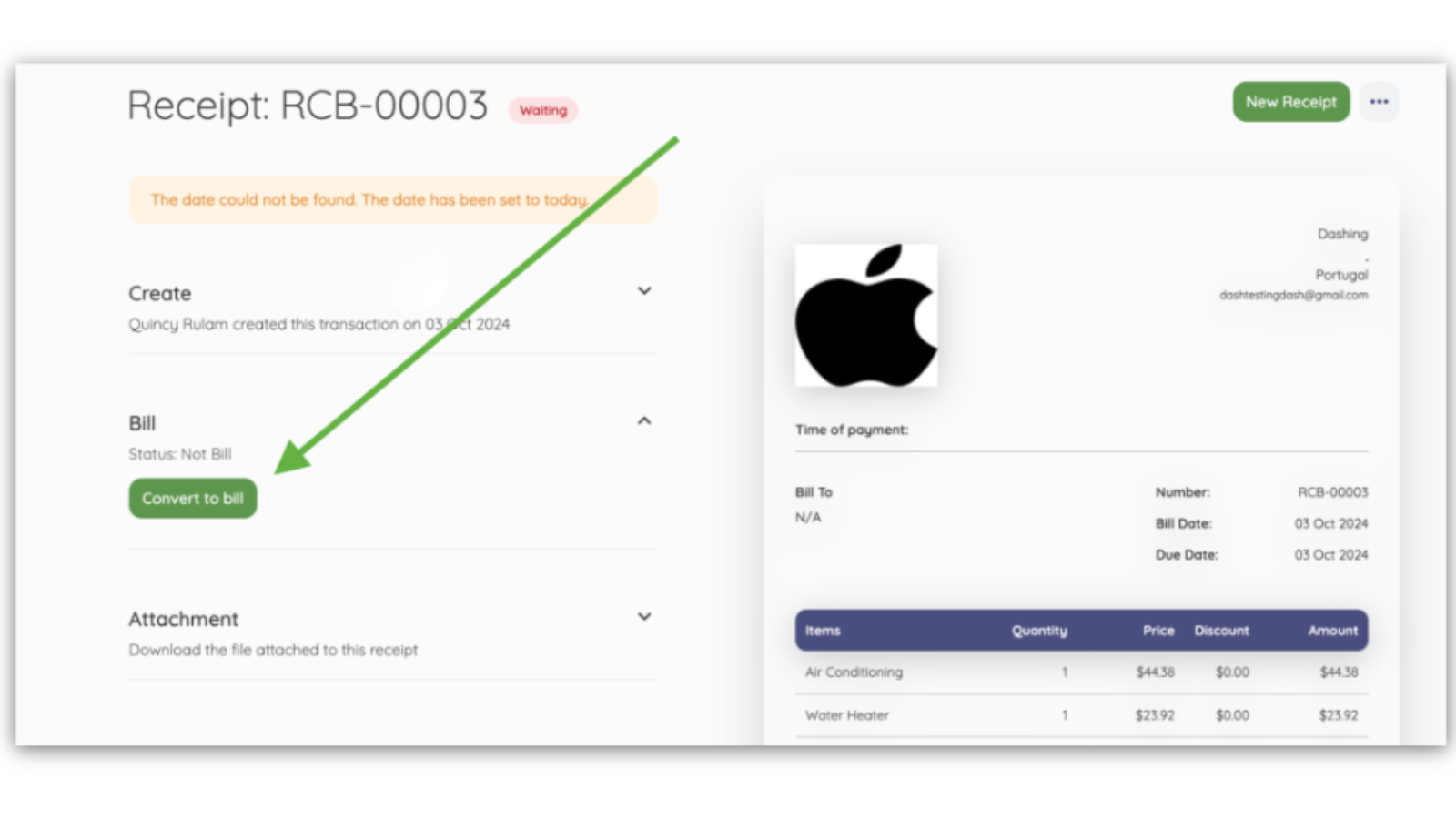
This is useful when you receive purchase receipts from suppliers, vendors, or service providers and want to keep your expense records organized. Instead of manually entering every detail from scratch, you can upload the receipt, select the bill document type, and convert the uploaded receipt into a bill from the receipt details page.
This helps reduce manual data entry and makes purchase records easier to track.
Recommended Reads
Here are some useful articles to help you manage costs, income, customers, and business records more effectively:
- How to Master Job Costing for Contractors and Trades (Without the Headache)
- Expense Tracking for Content Creators: What You Can Write Off in 2026
- From Viral Payday to Long-Term Plan: Making Your Creator Income Work for You
- Why Customer Statements Matter More Than You Think
- March 2026 Round Up: Amazon Seller Bookkeeping, User Growth, and Top App Trends